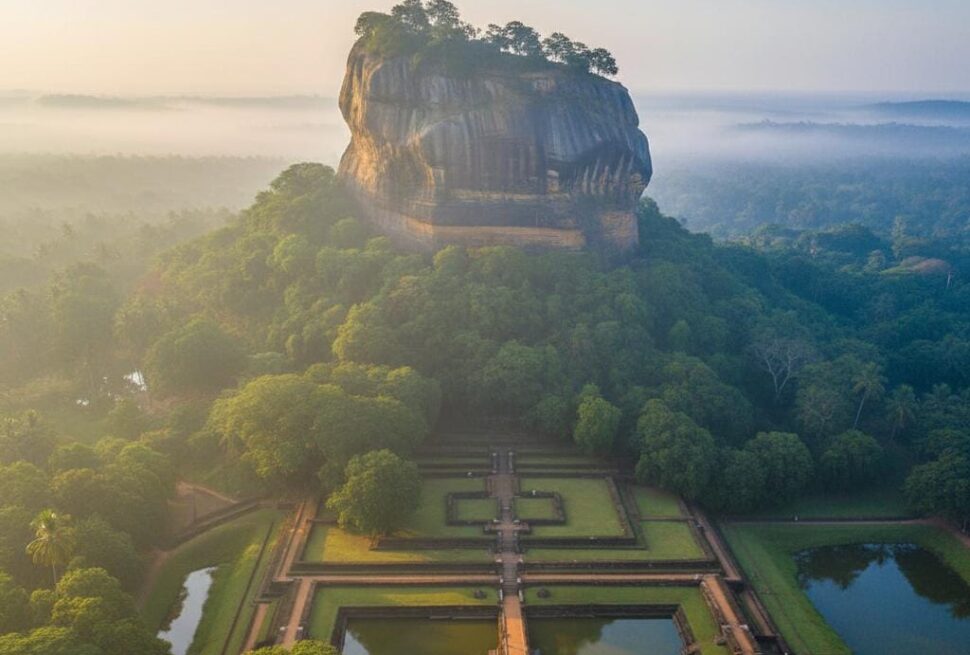
Sigiriya, also known as Lion Rock, is one of Sri Lanka’s most iconic and spectacular sites, often referred to as the Eighth Wonder of the World. This ancient rock fortress and palace, a UNESCO World Heritage Site, is a must-visit for its rich history, incredible architecture, and breathtaking panoramic views.
Here is a complete overview of Sigiriya Rock Fortress:
1. History and Significance
- King Kashyapa’s Fortress: The site’s most significant period was in the 5th century AD (477–495 AD) when King Kashyapa I built his capital and royal palace on top of the rock. He seized the throne by murdering his father, and fearing an attack from his rightful heir half-brother, Mugalan, he chose this unassailable location as his fortress.
- Monastery: Before and after Kashyapa’s reign, the rock served as a Buddhist monastery, first used by monks as early as the 3rd century BCE and then converted back into a monastery complex after Mugalan defeated Kashyapa.
- The Name “Sigiriya”: The name is derived from the Sinhalese words Singha (Lion) and Giriya (Hill), referring to the massive brick and plaster lion that once guarded the final flight of steps to the palace. Today, only the colossal Lion’s Paws remain.
2. Key Attractions and the Climb
The climb to the summit involves over 1,200 steps and takes most visitors between 1.5 to 3 hours round-trip, depending on fitness and crowds. The journey is an experience in itself:
- The Water Gardens: Located at the base, these are some of the oldest landscaped gardens in the world, renowned for their sophisticated ancient hydraulic system of canals, lakes, and fountains (some of which still work during heavy rain).
- The Boulder and Terraced Gardens: The path continues through these gardens, where natural boulders are integrated with man-made steps and terraces.
- The Frescoes (Ancient Paintings): A spiral staircase leads to a sheltered pocket in the rock face where the famous 5th-century paintings are preserved. These vibrant images, depicting ‘Apsaras’ (celestial nymphs) or the King’s concubines, are celebrated for their technique and artistry. Photography is strictly prohibited in this area for preservation.
- The Mirror Wall: Once highly polished with a lime plaster glaze, this wall was so smooth that the King could see his reflection. Today, it is famous for the ancient graffiti—poems and verses scribbled by visitors between the 6th and 13th centuries, offering unique insights into early Sinhalese language and art appreciation.
- The Lion’s Paws Terrace: This is the most iconic point, where the modern steps meet the remnants of the giant brick lion’s body, and the final ascent begins.
- The Summit: At the top (about 200m or 660ft high), you can explore the extensive ruins of the King’s palace and fortress, including the royal pool, throne, and foundations. The 360-degree panoramic views of the surrounding jungle and the Cultural Triangle are the ultimate reward for the climb.
3. Practical Travel Guide
| Aspect | Details |
| Location | In the Cultural Triangle of Sri Lanka, near Dambulla and Habarana. |
| Best Time to Climb | Sunrise (7:00 AM) or Late Afternoon (3:30 PM – 4:00 PM) to avoid the midday heat and crowds. The site closes at 5:30 PM (last entry usually 5:00 PM). |
| Entrance Fee | There is a significant entrance fee for foreign visitors (typically around $30-$36 USD, which includes the museum). |
| What to Wear | Light, breathable clothing, comfortable walking or hiking shoes, a hat, and sunglasses. Sunscreen is essential. Note: Unlike many temples, there is no strict dress code (shoulders/knees covered), but modest clothing is generally recommended in Sri Lanka. |
| What to Bring | Plenty of water, snacks (none sold on the rock), and a camera for the summit views. |
| Fitness | The climb is moderately strenuous, consisting of many steps. Not suitable for those with severe mobility issues or an extreme fear of heights (especially the metal staircases after the Lion’s Paws). |
| Caution: Wasps | Large wasp nests are present in the rock walls. Visitors are advised to walk quietly and avoid aggressive movements. Safety cages are available for shelter during a rare wasp attack. |
4. Alternative Viewpoint
- Pidurangala Rock: Located a short distance from Sigiriya, Pidurangala is a popular alternative or complementary climb. It offers a spectacular view of the Sigiriya rock itself, especially at sunrise or sunset, for a much lower entrance fee.