Yala National Park, nestled in the southeastern corner of Sri Lanka, isn’t just a stunning landscape of scrub jungle, lagoons, and rocky outcrops; it’s a world-class wildlife destination. While many parks around the globe chase the African “Big Five,” Yala offers a unique quest: spotting its own “Big Three”: the Sri Lankan Leopard, the Sri Lankan Sloth Bear, and the Asian Elephant.
A successful safari here is a blend of luck, timing, and expert guidance. Here is your professional guide to maximizing your chances of a thrilling encounter with Yala’s most elusive and majestic residents.
The Star of the Show: The Sri Lankan Leopard
Yala boasts one of the highest densities of leopards in the world, making it arguably the best place on the planet to see these magnificent big cats. The Sri Lankan leopard (Panthera pardus kotiya) is an endemic and larger subspecies, sitting at the top of the food chain in the park.
How to Spot a Leopard
- Timing is Key: Dawn and Dusk. Leopards are crepuscular, meaning they are most active during the cooler hours of early morning (6:00 AM to 9:00 AM) and late afternoon (3:00 PM to 6:00 PM). Booking a full-day safari or both morning and evening drives significantly increases your chances.
- Look Up, Not Just Down. Unlike their African cousins, Yala’s leopards love to lounge on the park’s characteristic large granite boulders and occasionally in the branches of large trees. Always scan the tops of these rocks—they use them as vantage points.
- Listen to the Alarm Calls. The best trackers often rely on their ears. If you hear a sudden, sharp alarm call from a Spotted Deer or the chattering of Tufted Gray Langur monkeys, a leopard is very likely nearby. Their calls are a dead giveaway of a predator in the vicinity.
- Optimal Season: The dry season (May to August) is generally considered the best, as the sparser vegetation makes the leopards easier to spot and they often gather near water sources.
The Shaggy Specter: The Sri Lankan Sloth Bear
The Sloth Bear (Melursus ursinus) is perhaps the most difficult of the Big Three to spot. With a shaggy, untidy black coat and long claws, this unique bear is primarily nocturnal and incredibly shy, preferring to forage under the cover of darkness. A sighting is a truly special, once-in-a-lifetime moment.
How to Spot a Sloth Bear
- The ‘Palu’ Tree Connection: June and July. The greatest concentration of sloth bear sightings occurs during the fruiting season of the native Palu tree. This usually falls around June and July, when the bears come out to feast on the sweet, fallen fruit, even during the daytime. Plan your trip around this short window for the best odds.
- Early Morning is Best. While nocturnal, if they are out foraging, the first hour of sunlight is when they’re most likely to be seen before retreating to their dense cover for the day.
- Look for Their Signature Moves. Keep an eye out for termite mounds and rotting logs. Sloth bears use their powerful, vacuum-like snouts and long claws to quickly dismantle these structures and suck up ants and termites—their main food source. Spotting a recently excavated mound can indicate a bear is near.
The Gentle Giant: The Asian Elephant
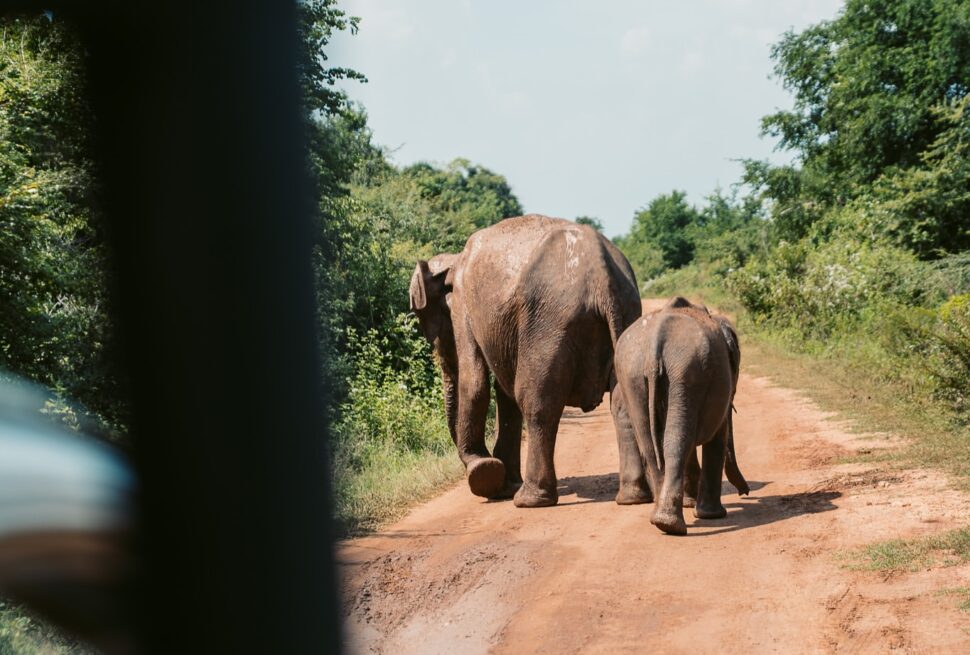
The Sri Lankan elephant (Elephas maximus maximus) is the largest and darkest subspecies of Asian elephant, and they are a common, spectacular sight in Yala. Home to a significant population, the park offers humbling encounters with these intelligent, majestic herbivores.
How to Spot an Elephant
- Look Near Waterholes and Lagoons. Elephants need vast amounts of water every day and are frequently found bathing, drinking, or cooling off in the numerous reservoirs, tanks, and lagoons. During the dry season, they are almost guaranteed to be near a water source.
- Scan the Open Plains. Large herds are often seen grazing on the open grasslands and ‘villu’ (natural waterholes) scattered throughout the park, especially in the central areas of Block 1.
- Watch for Families. You will often see them in family groups, with large matriarchs leading the herd and playful young calves following closely behind. While generally placid, always maintain a respectful distance, especially from mothers with young.
- Best Viewing Times: Elephants are visible all day, but they are often most active and charismatic during the cooler dry season months (February to July).
Pro-Tips for a Successful Yala Safari
1. Choose a Reputable Guide and Jeep
Your guide is your greatest asset. An experienced, professional naturalist-guide will know the animals’ habits, the best tracking locations (outside of known crowds), and the specific alarm calls. They will ensure your jeep is positioned for the best possible sighting without disturbing the wildlife.
2. Go Early and Stay Late
The vast majority of incredible sightings happen in the first two and last two hours of the day. A full-day safari, though more taxing, gives you the most time and is highly recommended if the Big Three are your primary goal.
3. Pack Smart
- Binoculars are essential for appreciating distant animals and following the activity in dense bush.
- A camera with a good zoom lens (200mm or more) will help you capture the action.
- Wear neutral colors (khaki, green, brown) and bring a hat and sunscreen.
4. Practice Safari Ethics
Yala is a protected reserve first and a tourist destination second. Always adhere to park rules:
- Keep a respectful distance from all animals.
- Stay inside the safari vehicle at all times.
- Keep noise to a minimum—loud talking, shouting, or music will scare animals away.
- Never feed the wildlife or leave trash behind.
By focusing on these strategies and respecting the environment, you are well on your way to experiencing the unparalleled thrill of spotting the Big Three of Yala National Park. The journey itself, through Sri Lanka’s beautiful dry-zone wilderness, is an adventure you’ll never forget.
Have you booked your safari yet, or are you still deciding on the best time to go?